
Image courtecy Leica Camera AG
Photogrammetry subsea - Colour vs B&W sensor
In photogrammetry, neither colour nor black-and-white sensors hold a definitive advantage across all scenarios. The optimal choice depends on specific factors related to your project and environment. Here’s a breakdown:
Colour Sensors:
- Benefits:
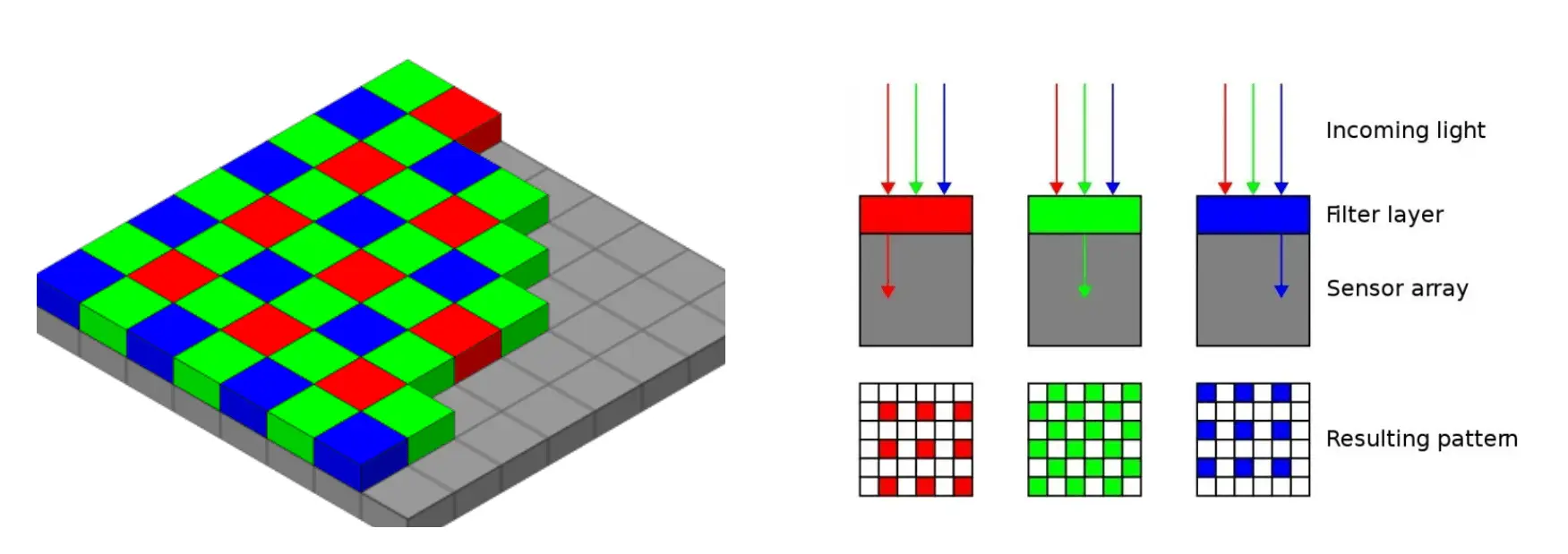
Offer texture information through colour variations, which can aid in matching points and improving reconstruction accuracy.
Useful for object identification and classification based on colour features, especially in diverse environments with various materials.
Can simplify post-processing by leveraging natural color information. - Drawbacks:
May be more sensitive to lighting variations, leading to color inconsistencies and reconstruction errors.
Colour information can be redundant for certain applications where only geometric reconstruction is needed.
Can contribute to larger file sizes compared to black-and-white images.
Black and White Sensors:
- Benefits:
Generally offers higher dynamic range, handling diverse lighting conditions better, especially in underwater or poorly lit environments.
Less sensitive to colour casts and lighting variations, potentially improving reconstruction accuracy under challenging conditions.
Can produce smaller file sizes compared to color images. - Drawbacks:
A lack of colour information can make object identification and classification more challenging.
Requires additional post-processing steps to add colour based on texture or external sources.
Ultimately, the choice between colour and black-and-white sensors for photogrammetry depends on:
- Project goals:
If accurate texture and colour information is crucial, prioritize colour sensors.
If geometric accuracy is the primary concern and lighting conditions are challenging, consider black-and-white sensors. - Environment:
Colour sensors might be advantageous in well-lit, diverse environments.
Black and white sensors might be better for underwater or poorly lit scenarios. - Post-processing capabilities:
If extensive post-processing for colour addition is feasible, black and white sensors might be viable. - File size limitations:
If storage space is restricted, black-and-white sensors can offer an advantage.
Additional factors:
- Sensor size:
Larger sensors often provide better overall image quality for photogrammetry. - Resolution:
Ensure sufficient resolution to capture the necessary detail for the desired model quality. - Software compatibility:
Verify your chosen photogrammetry software supports the selected sensor type.
Remember, the “best” sensor depends heavily on your specific project and needs. Weighing the pros and cons based on your unique circumstances will guide you towards the optimal choice.
Image at the top of page is from https://wilddogdesign.co.uk/blog/monochrome-digital/
